
WRI exists to promote wildlife rehabilitation, improve wildlife welfare, and conservation in Ireland.
Our school visits bring wildlife education to life through engaging, interactive sessions.
Our team delivers classroom talks and workshops tailored for different age groups, exploring topics such as native species, habitats, and the challenges wildlife face in Ireland. These sessions encourage curiosity and empathy, helping young learners understand the importance of protecting nature.
We use real-world examples and visual materials to create memorable learning experiences that align with national curriculum themes. Pupils leave with practical ideas on how they can make a difference for wildlife in their local area.
Schools can contact us at education@wri.ie to book visits or request educational resources to complement in-class learning on biodiversity and animal welfare.
We bring wildlife learning to local communities through engaging and accessible outreach events.
From tidy towns committees to environmental action groups, WRI supports community efforts to understand and protect local wildlife. Our presentations are informal, discussion-based, and adaptable to a range of ages and interests.
These sessions help community members learn how to recognise common wildlife, respond appropriately to injured animals, and support biodiversity through local actions such as habitat improvement or wildlife-friendly gardening.
By strengthening knowledge at the community level, WRI helps build a nationwide network of informed and compassionate wildlife advocates.
Our outreach events and festival stalls inspire public interest in wildlife and conservation.
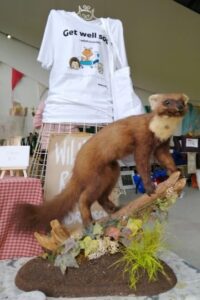
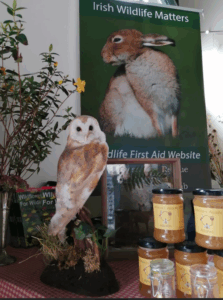
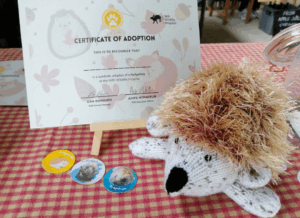
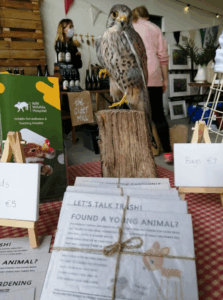
WRI regularly attends public events, biodiversity days, and environmental festivals across Ireland. These occasions provide an opportunity to meet people face-to-face, share educational resources, and answer questions about wildlife care and conservation.
Visitors can explore wildlife displays, take part in interactive activities, and learn how everyday choices affect Ireland’s wild animals and their habitats.
Each event allows us to connect with new audiences, spreading awareness about wildlife protection and encouraging positive, practical action for nature.
We collaborate with colleges and universities to strengthen wildlife knowledge among students and professionals.
WRI delivers guest lectures, practical workshops, and presentations to students on FETAC Animal Care, veterinary nursing, and environmental science courses. These sessions provide insight into wildlife rehabilitation, welfare, and conservation practice in Ireland.
We also support student projects and placements by sharing case studies and data from the field. Our goal is to ensure graduates entering animal-related professions are equipped to handle wildlife encounters with skill and compassion.
By working closely with educational institutions, we help bridge the gap between academic learning and real-world wildlife care.
Learn about Ireland’s birds and the roles they play in maintaining healthy ecosystems.
Ireland is home to a diverse range of bird species, from familiar garden visitors to rare migrants. Understanding their lifecycles, habitats, and behaviours helps protect them from threats such as habitat loss and pollution.
WRI’s educational materials explore bird biology, diet, nesting habits, and seasonal migrations, offering insight into their importance within the wider environment.
Through increased understanding, we aim to encourage respect for wild birds and promote actions that support them — from nest box placement to responsible feeding.
Ireland’s mammals form an essential part of our biodiversity, each with a unique ecological role.
From hedgehogs and badgers to foxes and bats, Ireland’s mammals inspire fascination and curiosity. Learning about their behaviour, habitats, and interactions with human activity helps foster coexistence and conservation.
WRI’s resources and talks highlight species identification, seasonal behaviours, and conservation challenges, encouraging better understanding of how to protect these animals.
By sharing accurate, accessible information, we aim to replace myth and misunderstanding with appreciation and informed care for wild mammals.
Ireland’s lesser-known amphibians and reptiles are vital indicators of environmental health.
Our native frogs, newts, and lizards are sensitive to pollution and habitat disturbance, making them powerful symbols of ecosystem balance. Understanding their lifecycles, breeding patterns, and environmental needs supports better protection.
WRI promotes awareness of these overlooked species through talks, field studies, and resources for educators. Learning about their habitats encourages communities to preserve wetlands, ponds, and other critical ecosystems.
Protecting amphibians and reptiles helps protect all wildlife that depends on the same delicate environments.
Wildlife learning can be fun, surprising, and full of discoveries!
From unusual animal adaptations to record-breaking abilities, our “Fun Facts” section offers fascinating insights into Ireland’s wildlife.
These snippets of knowledge are perfect for sharing in classrooms, community talks, and social media — sparking curiosity and conversation about the natural world.
Learning through wonder is often the first step toward caring, and caring leads to action.
Many long-held beliefs about wildlife are incorrect — but easily corrected with the right information.
This common myth often leads to unnecessary animal rescues.
Most wildlife parents do not abandon their young because of human scent. In many cases, animals found alone are being cared for — their parents are nearby, waiting to return once it’s safe.
WRI’s guidance helps people recognise genuine distress and avoid removing healthy young from the wild. Knowing when not to intervene can save more lives than intervention itself.
While nature is resilient, human impact means intervention is sometimes necessary.
In an ideal world, natural systems would balance themselves — but habitat destruction, pollution, and traffic often tip that balance.
WRI helps the public and professionals recognise when intervention supports natural recovery and when it risks unnecessary interference. Understanding context helps ensure wildlife receives the right care at the right time.
Inspire the next generation of wildlife protectors through fun, creative activities.
Our Wild Child resources are designed for use in schools and youth groups, encouraging children to explore nature through play, observation, and imagination.
These activities help young people build empathy for animals, understand biodiversity, and connect classroom learning with real-world action.
By engaging children early, we nurture curiosity and respect that lasts a lifetime.
Support secondary students in exploring wildlife and environmental responsibility.
Our Wild Schools resource for second-level students provides structured activities linking science, ethics, and ecology. Lessons encourage critical thinking about human-wildlife relationships and biodiversity challenges.
Teachers can use these materials to complement curriculum-based topics, promoting deeper understanding of wildlife conservation in Ireland.
Engaging young people at this stage empowers them to become informed advocates for nature.
Read all about it here
Share clear, practical guidance on what to do — and what not to do — when encountering wildlife.
Our posters and infographics provide quick, accessible information for schools, community centres, and veterinary practices.
Each one addresses common wildlife situations, helping people make confident, responsible decisions that prioritise animal welfare.
By sharing simple, visual guidance, WRI helps ensure that good intentions lead to the right actions for wildlife in need.
Wildlife Road Fatalities in Ireland: Lessons from Research and Paths Forward
The number of vehicles on Irish roads has jumped from 2,570,294 in 2015 to 3,1000,000 in 2024. A 2017 survey of 9,500 motorists, by the AA, found 13% had been involved in at least one collision with an animal, or bird.
Ireland’s expanding road network has become one of the most pervasive threats to wildlife, bringing vehicles into daily conflict with animals moving through their habitats. While the scale of losses is hard to quantify, the available research, citizen-science reporting, and dedicated ecological studies show that the toll is significant but that solutions exist.
Who is being killed, when, and where
Irish surveys confirm that hedgehogs, badgers, rabbits and foxes are the most frequently recorded mammal road casualties. Mortality peaks in spring (breeding dispersal) and late summer/early autumn (juveniles on the move). Birds of prey, especially low-flying nocturnal hunters, also feature in collision records.
Otters remain a special concern: protected by law, yet often killed at bridges and culverts where road and river corridors overlap. National guidelines highlight road mortality as one of the greatest anthropogenic threats to Irish otter populations.
Citizen science has played a crucial role in mapping this problem. The National Biodiversity Data Centre’s Road Kill Survey hosts thousands of public submissions, helping identify seasonal trends and geographic hotspots, even if true numbers are under-recorded.
Dr Aoibheann Gaughran and the M11 Badger Study
The late Dr Aoibheann Gaughran of Trinity College Dublin transformed how Ireland understands roads and badgers. Her long-term GPS-collar study tracked badger movements before, during, and after the M11/N11 upgrade in Co. Wicklow.
Her findings were clear: when continuous badger-proof fencing was combined with purpose-built underpasses, badger deaths were eliminated and territories remained stable. After construction, GPS-tagged badgers were documented using the underpasses regularly (around 10 crossings per month). In effect, the right engineering removed the conflict entirely.
Beyond this, Dr. Gaughran’s work illuminated unusual “super-ranging” male badgers and showed how roadworks could increase nightly distances travelled without fragmenting populations – critical insights for disease ecology, conservation, and road design.
Barn Owls and the Road Network – Research by John Lusby
While mammals dominate roadkill statistics, Ireland’s barn owl has emerged as a high-profile avian casualty. Research led by John Lusby of BirdWatch Ireland has highlighted how roads exacerbate the pressures on this already vulnerable species.
Barn owls often hunt along roadside verges where prey is abundant, especially in areas with long grass and rough margins. Lusby’s monitoring has shown that road mortality is now one of the lleading causes of death for Irish barn owls, alongside secondary rodenticide poisoning. The impact is amplified by the species’ fragile population: with fewer than 1,000 breeding pairs in Ireland, every collision matters.
Lusby’s research also points to solutions. By adjusting verge management, avoiding attractive tall grass habitats right at the roadside, and strategically placing nest boxes away from high-traffic corridors, we can reduce the risk. His work mirrors Dr. Aoibheann Gaughran’s in demonstrating that practical, evidence-based interventions can dramatically cut wildlife fatalities.
Common Threats and Proven Fixes
The studies of both Gaughran and Lusby converge on a central truth: wildlife road deaths are predictable, preventable, and must be factored into planning and maintenance as standard.
Key measures include:
Counting What Matters
At present, Ireland still lacks a single, systematic annual dataset on wildlife road fatalities. Citizen science fills some of the gap, but official, structured monitoring is needed – especially for species of high conservation concern such as barn owls, otters, and bats.
The research mentioned above offers a template: combine rigorous science with practical design, and share findings widely. These studies show that targeted measures work. What is needed now is commitment – to scale them up, integrate them into every road project, and treat reductions in roadkill as a measurable outcome of good infrastructure.

“Lorem ipsum dolor sit amet, consectetur adipiscing elit, sed do eiusmod tempor incididunt ut labore et dolore magna aliqua. Ut enim ad minim veniam, quis nostrud.”
Role | Company
“Lorem ipsum dolor sit amet, consectetur adipiscing elit, sed do eiusmod tempor incididunt ut labore et dolore magna aliqua. Ut enim ad minim veniam, quis nostrud.”
Role | Company
“Lorem ipsum dolor sit amet, consectetur adipiscing elit, sed do eiusmod tempor incididunt ut labore et dolore magna aliqua. Ut enim ad minim veniam, quis nostrud.”
Role | Company